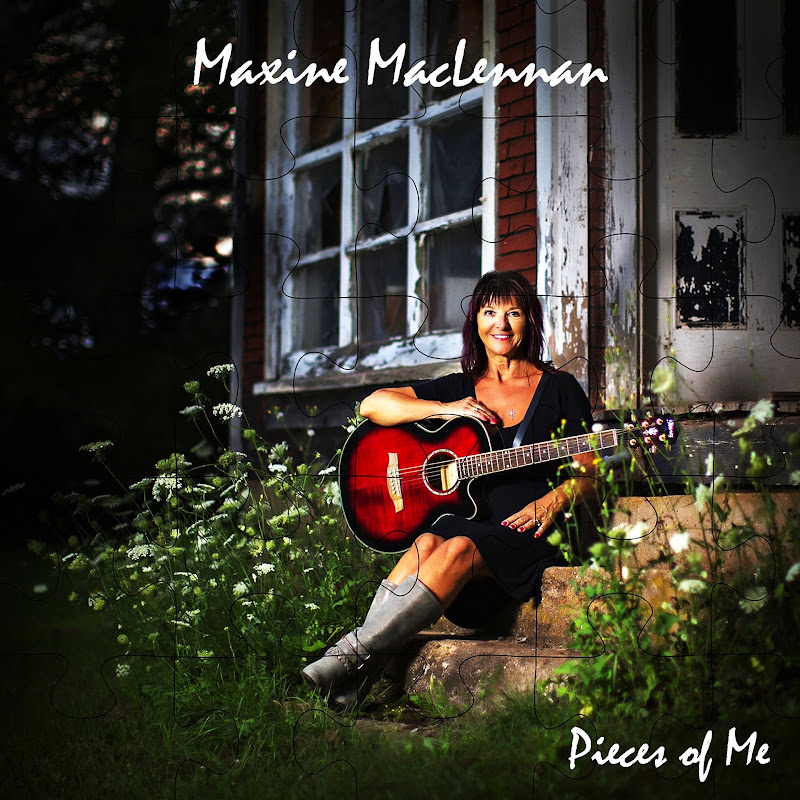
Canadian country in 2026 is quietly having a reckoning with itself — caught between the Nashville polish that streaming rewards and the rougher, more lived-in textures of its own regional traditions. It is in that tension, not above it or outside it, that Maxine MacLennan has chosen to work.
MacLennan writes and performs with a directness that belongs to the country idiom without being beholden to its contemporary tics. Her sonic vocabulary leans into the warmth of acoustic string arrangements, a vocal delivery that sits close to conversational without sacrificing melody, and a lyrical sensibility that tends toward the intimate rather than the anthemic. There is a sense, listening to her catalogue, that these are songs written for someone specific — and that specificity is precisely what makes them land for anyone at all.
East Coast Girls is perhaps the clearest expression of her geography and identity, carrying the kinetic spirit of the Atlantic seaboard in its rhythm and its pride. The Ceilidh Song is more openly rooted in Celtic tradition — joyful and communal in a way that feels earned rather than performed, the kind of track that understands what a gathered room actually sounds like. Pieces of Me moves into quieter, more introspective territory, its structure unhurried, its emotional weight distributed across small details rather than a single chorus surge. Forever Love and To the Moon and Back round out a catalogue that spans devotion in its various registers — romantic, familial, place-based — without flattening any of them into sentiment.
The broader country scene in 2026 is fragmenting in productive ways. Americana and folk-adjacent country are gaining traction alongside the louder, more production-heavy mainstream, and regional scenes — including Canada's east coast — are asserting their own sonic and cultural specificity with renewed confidence. MacLennan fits naturally into this current: artists who draw on vernacular traditions without treating them as museum pieces, who understand that authenticity in country music is not a posture but a practice.
There is something in MacLennan's music that speaks to a contemporary appetite for groundedness — for songs that know where they come from. In a cultural moment defined by dislocation and noise, the specificity of place that runs through her work functions as something more than aesthetic choice; it is a kind of anchor.
Where MacLennan goes from here will depend on how far she pushes the tension between the intimate and the expansive — whether she keeps the camera close or begins to widen the frame. Either direction, the foundation is already clear: a voice that trusts itself, and material that deserves that trust.